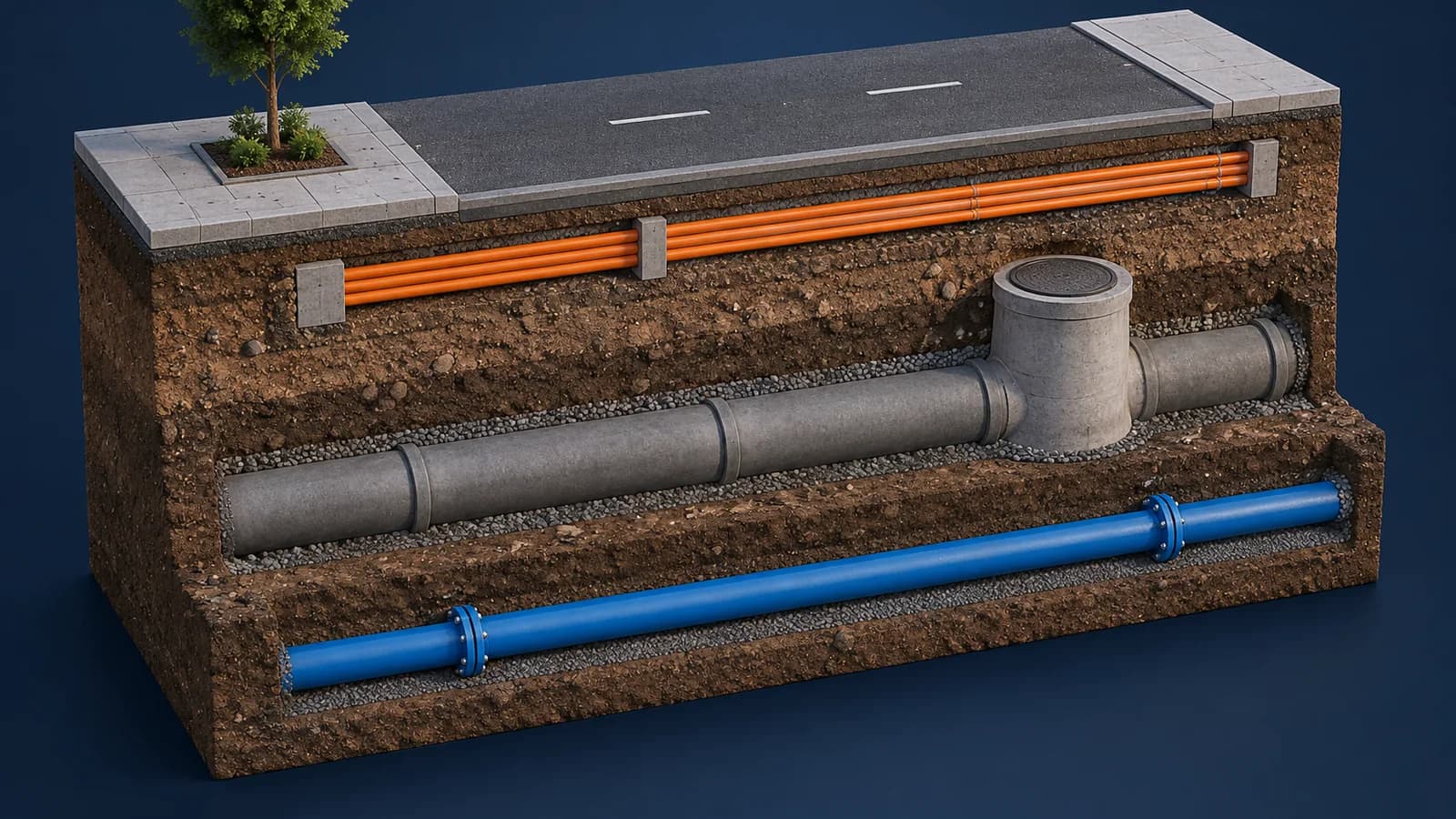
Underground Modeling
3D modeling and coordination of below-grade utilities, storm drainage, and civil infrastructure using Civil 3D and Revit. We detect conflicts between underground systems before excavation, where change orders are most expensive.
Underground utility modeling creates an accurate 3D picture of what exists below grade (water, sewer, gas, electrical, telecommunications, and storm drainage) allowing contractors and engineers to plan excavation, foundation work, and new utility installations without severing existing services. At EZ-VDC, we combine existing utility records, GPR survey data, and Civil 3D modeling to produce clash-checked underground models that integrate directly with above-grade BIM coordination workflows.
Record Drawing Collection
We gather all available utility record drawings, municipal GIS data, and historical as-built documentation to establish a baseline for existing underground conditions.
Survey Data Integration
GPR survey data, potholing reports, and field-located utility markings are integrated into the model, with uncertainty zones flagged and confidence levels documented.
3D Utility Modeling
All utilities are modeled in Civil 3D with correct depth, diameter, material, and service type, georeferenced to the project coordinate system for full integration with above-grade models.
Conflict Analysis
The underground model is federated with above-grade structural and civil models in Navisworks to detect conflicts between new construction elements and existing utilities.
Coordination Report & Support
We deliver a conflict report, utility protection plan, and sequenced excavation drawings, plus on-call support as excavation proceeds and field conditions are confirmed or updated.
What we need to scope your project
Share the project stage, disciplines, required deliverables, and target dates. Tell us which drawings, models, BIM Execution Plan, or information requirements are available.
We agree on formats, information requirements, responsibilities, review cycles, and acceptance criteria before kickoff. Deliverables follow the agreed scope.
Discuss your projectWhat existing data do you need to model underground utilities?
We work from: municipal utility record drawings (water, sewer, gas, telecom as-builts), city and county GIS utility data, GPR (ground-penetrating radar) survey files from a licensed locator, pothole reports, and any existing civil drawings for the site. The combination of these sources determines model accuracy; we document the confidence level of each utility in the delivered model.
How accurate is underground utility modeling?
Accuracy is directly tied to available survey data. Utilities with GPS-located GPR surveys can be modeled to ±100mm horizontal and ±150mm vertical. Utilities modeled from record drawings alone carry greater uncertainty; we flag these with accuracy zones in the model so excavation contractors know which areas need field verification before digging.
Can you detect conflicts between new construction and existing utilities before excavation begins?
Yes. This is the primary value of underground modeling. We federate the 3D utility model with your proposed structural, civil, and MEP models in Navisworks and run conflict analysis. Conflicts found in the model cost orders of magnitude less to resolve than utility strikes discovered during excavation, which can halt work for days and create significant safety and liability exposure.
What software do you use for underground utility modeling?
Utility networks are modeled in Civil 3D with correct pipe depth, diameter, material, slope, and invert elevations. The Civil 3D model is then exported to Navisworks for above/below-grade conflict analysis. Deliverables include Civil 3D native files (.dwg), IFC for BIM integration, and PDF/DWG plan sets for construction use.
Do you coordinate directly with the site civil engineer or just provide models?
We work directly alongside the site civil engineer and EOR. Underground modeling is inherently a coordination role: we aggregate their design intent against existing utility data, identify conflicts, bring unresolved issues to coordination meetings, and update the model as utility designs evolve through the RFI and design change process. The deliverable is a conflict-resolved, construction-ready utility model.
Editable worksheets for scoping the work
Blank Markdown templates: open them in any text editor. They contain no client data and do not represent project results.
How to compare proposals