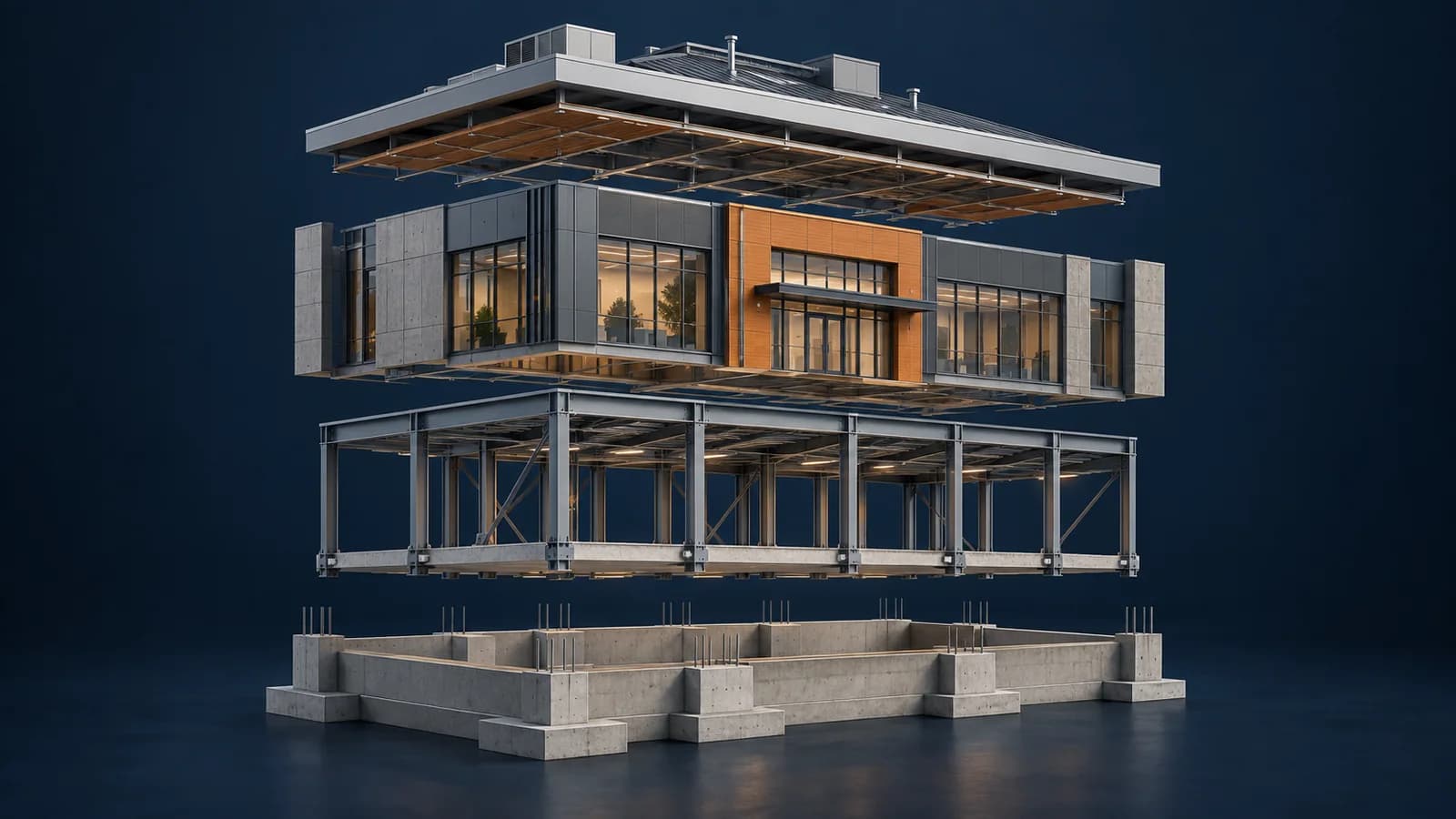
BIM Modeling & Revit Services
Architectural, structural and MEP BIM modeling in Revit. Define model information, construction drawings, formats and review requirements.
Our BIM modeling services cover architectural, structural and MEP information for agreed design, coordination and documentation uses. Revit model production can be combined with specified construction drawings and schedules. We define the elements, properties, source information, formats and review responsibilities before work begins; shop drawings and as-built verification are scoped explicitly.
Document Review & LOD Planning
We review all available drawings, specifications, and reference models to establish modeling scope, LOD requirements per system, and a project-specific modeling standards guide.
Model Development
Disciplined modeling in Revit following established standards: correct family types, parameter mapping, and system connectivity from the start, not as a later cleanup task.
Internal QA/QC
Every model goes through our checklist-based QA process: geometry accuracy, naming compliance, parameter completeness, and basic self-clash review before client delivery.
Client Review & Revision Cycles
Models are shared via ACC or Revizto for client review, with a structured comment response process ensuring all markups are tracked and addressed in subsequent releases.
Final Handoff
Deliverables include the discipline Revit model, linked file structure, model transmittal, and parameter legend: everything needed to hand off to coordination or construction teams.
Revit modeling and construction documentation
Request architectural, structural or MEP BIM modeling with an explicit intended use. Revit services can include models, drawing production and schedules; each output is defined in the scope.
- Source drawings, models or surveys, including revisions and known gaps.
- Disciplines, zones, elements and required properties.
- Model use, Revit version, coordinates and required exchange formats.
- Drawing and schedule lists, review rounds and delivery dates.
How we define cost, timing, and deliverables
Pricing depends on input quality, complexity, model information, drawing count and revisions. We agree a sample and acceptance checks. General construction documentation and specialist shop drawings are separate deliverables; requesting a model does not automatically include every drawing package.
Request a Revit modeling proposalGuides for planning your project
Do Revit modeling services include drawings?
Only the agreed drawing package is included. Specify the sheet list, scales, schedules, annotation requirements and review stage alongside the model requirements.
What determines modeling cost?
Source quality, element complexity, disciplines, required properties, drawing count and revisions affect effort. We quote against a defined scope rather than a universal rate per area.
Is a model from old drawings field-verified?
No. Its reliability depends on the source information. If you need documented existing conditions, define field verification or Scan to BIM as part of the scope.

Editable worksheets for scoping the work
Blank Markdown templates: open them in any text editor. They contain no client data and do not represent project results.
How to compare proposals