VDC Services: What They Include and How to Choose the Right Provider
VDC services cover BIM coordination, clash detection, 4D scheduling, scan to BIM, and digital twins, and the best providers do more than run software: they structure the workflows that turn models into construction decisions. Here is what each VDC service involves and what separates a strong program from a superficial one.

VDC (Virtual Design and Construction) services are the set of technology-enabled workflows that help project teams plan, coordinate, and build more effectively. On complex construction projects today, VDC is not optional it is the standard way large GCs manage design coordination and construction planning.
But "VDC services" means different things to different providers. Understanding what each service involves and what separates a strong VDC program from a superficial one helps you make better decisions when selecting partners and scoping engagements.
The Core VDC Services
BIM Coordination and Clash Detection
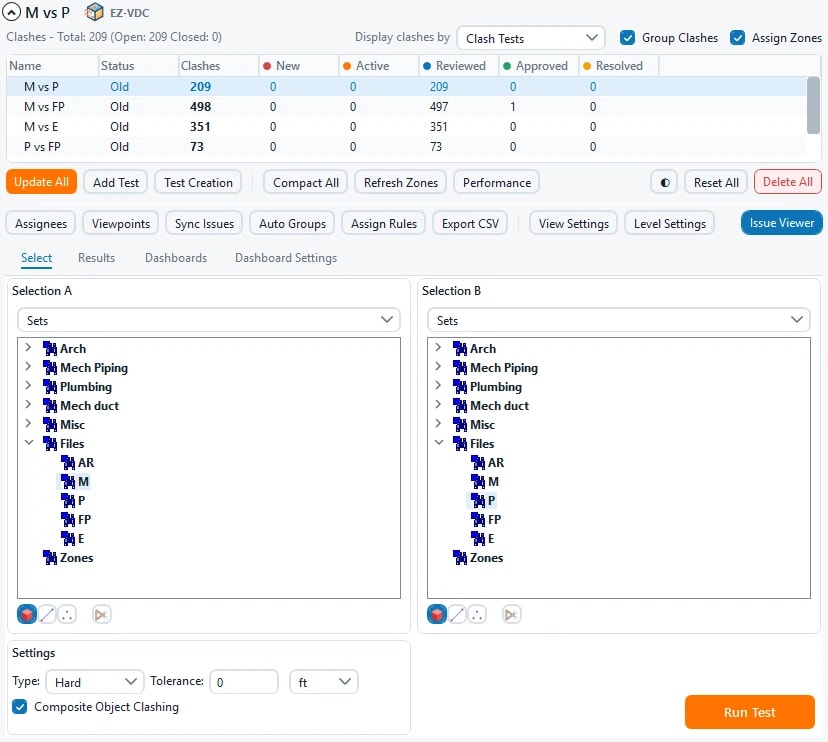
The most common VDC service, and the one with the clearest ROI. A VDC coordinator federates models from all design and trade partners, runs systematic clash tests, facilitates coordination meetings, and tracks issue resolution through to a coordinated, buildable model.
What separates strong BIM coordination: LOD requirements that match construction phase, structured triage protocols (not just clash lists), weekly coordination cycles that stay ahead of the schedule, and a VDC coordinator with field experience not just software skills.
4D Scheduling
Linking the BIM model to the construction schedule creates a visual simulation of how the project gets built. 4D is most valuable for logistics planning, owner communication, and identifying sequence conflicts before they become critical path problems.
What separates strong 4D: The schedule drives the simulation not the other way around. The best 4D models are linked to a live P6 schedule and updated at each schedule revision, not produced once at preconstruction and shelved.
Scan to BIM
Laser scanning existing conditions and modeling them in Revit. Essential for renovation, retrofit, and historic preservation and increasingly used for QA/QC on new construction.
What separates strong Scan to BIM: A scanning plan with full coverage (no shadowed areas), a modeling scope that defines LOD before scanning begins, and QA/QC of the model against the point cloud after completion.
VDC Consulting
Strategic VDC work: BIM Execution Plan development, VDC program setup, staff training, technology selection, and project-level VDC management.
What separates strong VDC consulting: A consultant who has executed VDC programs on real projects not just written standards. The BEP must be specific to your project, your team, and your construction phase.
"Most VDC providers are either tool users or tool vendors. The highest value providers are both they build the tools they use, and they know how to apply them on real projects."
What to Look for in a VDC Provider
Field experience, not just software expertise. VDC is a construction discipline, not an IT service. The best VDC coordinators understand construction sequencing, subcontractor dynamics, and the difference between a coordination issue and a design problem.
Sector experience. Healthcare, pharmaceutical, and laboratory projects have MEP complexity that is fundamentally different from office or residential. A VDC provider who has only done commercial interiors will struggle on a hospital tower.
Their own tools. A VDC provider who builds their own automation tools plug-ins, custom scripts, proprietary workflows delivers faster and more consistent results than one who relies entirely on off-the-shelf software.
Bilingual capability. For projects in the US market with Latin American ownership or subcontractors, or for projects in Latin America with US project management standards, a bilingual VDC team eliminates the communication gaps that plague cross-border projects.
VDC Scope and Pricing
VDC is typically scoped by service (coordination, 4D, scan) and project complexity (size, number of disciplines, schedule). Rates vary significantly by provider type:
- Large VDC firms charge more for overhead but offer broader bench depth
- Independent VDC consultants offer senior-level expertise at lower overhead
- International teams offer competitive rates for document production work
The right answer depends on your project. A $40M renovation needs different VDC support than a $500M pharmaceutical campus.
EZ-VDC works as both a primary VDC partner and as an augmentation resource for large GC VDC programs bringing field-tested senior expertise to every engagement, regardless of project size.
The ROI Case for VDC Services
Measure outcomes against a documented baseline: review hours, issue aging, rework events and accepted model releases. Record the scope, period and calculation method, and distinguish potential avoided cost from an invoiced saving. A clash count alone does not establish ROI. We do not publish project-specific RFI, change-order or financial reductions without traceable records.
Use the editable project scope worksheet to agree the deliverables and acceptance criteria before comparing prices.
Frequently Asked Questions About VDC Services
What is included in a VDC coordination service?
A full VDC coordination service typically includes: federated model management (aggregating models from all disciplines into a single file); clash detection and triage (identifying and categorizing conflicts, filtering noise from actionable issues); coordination meeting facilitation (weekly or bi-weekly meetings with trade representatives to resolve open issues); issue tracking and reporting (status dashboards showing open, in-progress, and resolved clashes); and BIM Execution Plan management (updating the BEP as the project evolves). Some providers also include LOD compliance review, model quality checks, and as-built documentation as part of the coordination scope.
How much do VDC services cost?
VDC service cost depends on disciplines, model readiness, site capture, review cadence, duration and deliverables. Request a scoped proposal with assumptions, exclusions and acceptance criteria. Published project construction values are not service prices, and an estimated avoided cost is not a verified return.
What is the difference between BIM coordination and VDC management?
BIM coordination is the technical workflow: running clash detection, facilitating issue resolution, managing the federated model. VDC management is the program layer above it: defining the BIM Execution Plan, setting quality standards, coordinating between the design team and construction team, managing the CDE, and ensuring VDC deliverables align with project milestones. On small projects, one person often covers both. On large projects, the VDC Manager sets the program and the BIM Coordinators execute it.
Do I need VDC services on a small project?
Start with the decision and the cost of uncertainty. For renovation work, agree access, coverage and the validation needed before deciding whether site capture is justified. There is no universal project-value threshold or guaranteed payback.

Stanford MS · Published Autodesk Marketplace Developer
Stanford-trained civil engineer with over a decade leading VDC on projects from $30M to $450M across healthcare, hospitality, and infrastructure.
Let's talk about your project.
Share the intended use, available information and target date. We can help define the scope and deliverables for your BIM or VDC work.